Monday, April 30, 2012

Busy! Busy! Busy!


Last week I sang a concert, had two rehearsals for said concert, went to two parties, had another rehearsal, had two rehearsal classes, hosted a guest lecturer, was part of two rehearsals \ interviews for a new music director - at one of which I sang solos - not to mention singing in church, and teaching and taking lessons.

This week I have one rehearsal at which there will be an interview for a new music director - I will sing solos - not to mention singing in church (2 services this week), and teaching (and taking) lessons and two rehearsal classes.

Next week I have two concerts, two receptions, two rehearsals, not to mention singing in church, and teaching lessons.

Life is getting somewhat complicated as we hurl ourselves to this end-of-semester time of year in the academic calendar.

It is busy on the farm, but nothing is ending.

This week was in the 80s and 90s, and we put up most of the shade cloth and lattice onto the grid system we installed last year. So much easier now the system is in place!


We also turned over one of the beds, removing and composting the bolted lettuce (saving some seed). We decided to remove the top 6 in. of dirt as well, and brought in newly composted dirt to mix in. This bed had been used for lettuce, two seasons in a row, and we felt there was likely very little nitrogen left in the dirt. We have planted a mess of melon seeds in the new bed and are looking forward to the new growth.

The peppers are coming on strong. They are about ready for their first harvest.


The tomatillos are getting larger every day - it seems like you can watch them grow. Need to find out what to do with them! (besides salsa verde, which I don't like).


The beans are starting to flower.


There are lots of carrots and onions that we've been picking and eating all along. 


Plus, some onions are going to seed and are simply beautiful.

The farm is always changing, transitioning, moving from one season into the next. But nothing ever feels like it's ending. There's always a new season to plan for, a new crop to grow, a new plot to dig, and seeds to save.


Sunday, April 22, 2012

New Orchard !!


A couple of weeks ago we visited The Urban Farm - www.urbanfarm.org - and learned many things. But one of the major lessons is that you can grow fruit trees like a hedge; not too tall, not too round, but a continguous, fruit-bearing hedge. This caused a lightbulb to flash in our minds. What if we take out our cactus garden strip, at the front of the property, and replace it with an orchard? Several benefits; 1) maintain the privacy that we had been getting from the cacti, 2) more sunlight on the front yard by removing a few un-necessary trees, 3) much easier to maintain, 4) fruit-bearing instead of not producing anything.

Totally win \ win.  Only downside is it was a lot of work. And, we're not done, but we are well on our way to having an orchard with - so far - 3 types of oranges, one apple and one peach. And plenty of room to fill in with more trees as we're able. Our big spring project for this year.


Last year's big spring project was the erection of the support system for shade. This came in handy this week, as the temperatures soared to over 100. It was a breeze throwing up a few lattice pieces on top of the wires and fastening them down.

Thursday, April 12, 2012

Water Deeply


It's April and it's beginning to get hot. Not "hot" as we know it in the coming months. Not "hot" as we will understand it next fall. April's hi temps are in the 90s - and next fall that will feel like a breath of fresh air. We know this, and yet it still feels hot to us, because it is a harbinger of what is to come. What you, depending on your bent, either relish or fear. I'm in the fear department.

Silly, because it is really so beautiful outside - absolutely the best wild flower season. My iris have bloomed for the first time ever. Last year they were moved into the bulb garden to get more sun, but didn't flower. This year they are glorious.

The heat signals a change in season for the plants as well. Some - like the lettuces and peas - are at the end of their run, and are bolting or dying. This week we started clearing out the beds of the spent plants. We transplanted what spinach was still viable, cut out 6 inches of the topsoil, dug underneath that to loosen the bed for new roots, added in good compost and dug that in deeply. Then we transplanted 3 Pontano and 1 Italian Red Pear tomato, planted seeds for Punta Banda and Nichols Heirloom tomatoes, and seeds for Sinahuisa chiles. I also sprinkled in a healthy dose of zinnia seeds - to combat white flies.

Other plants - like onions and peppers - have survived the winter and are starting to show the promise which will be harvested in the next couple of months. It is time to adjust the watering technique for these plants to a slow trickle to cause a deep soak. Roots grow into air pockets, which are identified to them by water flow. It's as if the water soaking through the dirt entices the root to grow into the cracks. A deep soak encourages the roots to grow deeply; away from the sun's hot rays and into the coolth of the earth.

Over the coming months we will employ more measures to avoid the sun's hottest rays. But for now it is enough to water deeply. FYI: March temps are in the 80s. April in the 90s. June = 100s. July = 110s and, yes - I kid you not - August can = 120s.  Uff da me.


Saturday, March 31, 2012

Small is Good

It is March in the Valley of the Sun. Perhaps our most beautiful month, if what you like is blooming, blossoming, teeming life. Spring here is like spring anywhere in the U.S., just a little earlier. And, too, it is a fleeting season. This is our short growing season. Soon summer's temperatures will challenge all but the most draught tolerant plants. So we pack our gardens full of food and flowers that will nourish our eyes; our bodies; our souls. I predict a lot of preserving coming up in the months ahead.

But for now we have work to do.

Though we would dearly love more land - we scheme, pour over Craigs List, consult real estate postings near and far - there are some definite advantages to being small. Fewer weeds, for instance. The most "weed" work we do on our little farm is taking things we love out of places where we don't want them. I referred to the Ixia a few weeks back. We have since pulled the spent plants, transfering a bunch of seed into the flower bed. If your plant is in the wrong place, regardless of how much you love it, it is still a "weed".

It is also thinning season. Hands in the dirt, dirt under the fingernails, back breaking, pain staking, healthy, strong, delicious work.

This morning I tackled the beets. Beet seeds are called multi-germ, meaning they produce more than one seed per seed ball. So, regardless of how careful you are in your spacing at planting time, they will have to be thinned at seedling stage in order to produce mature-sized beets. You will most often hear the suggestion that you eat the thinnings. Very true about baby carrots as well as beet seedlings. However, according to my favorite go-to book, "The Encyclopedia of Country Living", by Carla Emery, these thinnings can also be transplanted. Water well the existing plants. Fluff up the patch that you will plant. Delicately lift \ uproot the smaller plants and stuff them in the new patch. Pat down gently and water well. We'll see how well these seedlings "took" in another day or two.


Saturday, March 17, 2012

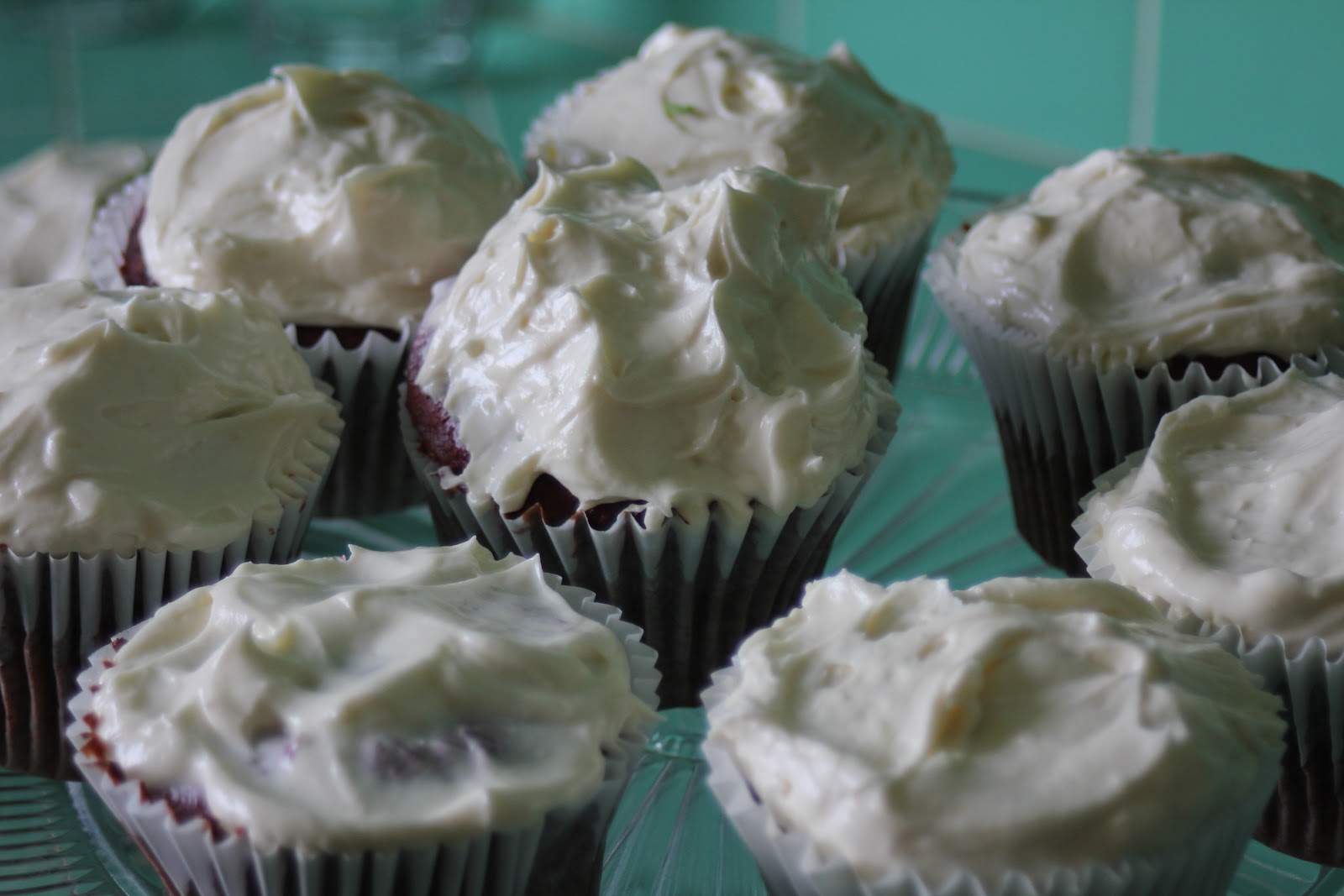
Beet Red Velvet Cake


I don't like beets. I can't quite figure them out. They're sweet? AND starchy? Are they dessert? Side dish? So this year I resolved to to take advantage of their natural sweetness AND starchiness, & try baking with them. My first foray is Beet Red Velvet Cake.

Whoa! This is seriously good cake. We made cupcakes, because we want to see if we can do it, in order to sell more produce. This recipe, adapted from familyspice.com, made 16 large cupcakes.


2 large beets
1 TBS balsamic vinegar
1/2 c unsalted butter, room temperature
8 oz. cream cheese, room temperature
2 1/3 c granulated sugar
4 large eggs
1 1/2 tsp vanilla
2 c all-purpose flour
1 1/2 tsp baking powder
1 1/2 tsp salt
1/2 c cocoa powder, unsweetened (not dark or Dutch processed)


Preheat oven to 350F. Place beets in small baking dish. Cover with parchment paper & foil, and roast until tender, about 60 - 90 min. When cool, puree in blender or food processor. In a mixer, cream butter and cream cheese. Mix in butter until smooth and fluffy. Mix in eggs, one at a time, and then vanilla. In a separate bowl mix dry ingredients. In batches, blend dry with wet. Fold in beets & spoon into cups. Cook 30-40 mins.

Cool completely.

Best frosting ever, from smittenkitchen.com:

2 8-oz. packages cream cheese, room temperature
1/2 c unsalted butter, room temperature
2 c confectioners sugar
1/4 c pure maple syrup

Blend everything thoroughly. Slather on cake. Eat hearty.

Ok, so I don't know how to make them pretty. More to learn. Still, amazingly amazingly delicious.

Saturday, March 10, 2012

 One Week Early

     We're one week early. With no February frost this year everything is blooming, blossoming and ripening one week early. You can tell the minute you walk outdoors; the delicious scent of orange blossoms fills the air. The Wisteria is just beginning to open, and its intoxicating scent practically assaults you when you walk underneath. The Ixia has reappeared in force. Last year we co-opted the flower bed for veggies. So it appears that we have successfully transferred the Ixia into a better spot. This year we will likely try to move the patch again. Although it is a bulb, it grows and spreads from seed. After the flower is spent & drops off, it is very easy to capture the seed & simply spread in the new area.

     Ordinarily all of these would be blooming at least one week later. But it's farm time.
     This week we're seeing the end of our first batch of peas. Peas are easy to grow in the Southwest. They are relatively free of pests, they are fairly cold hardy, they grow vertically so they don't take up much room in a garden, which makes them especially handy in urban settings. You can tuck pea seeds just about everywhere, as long as there is something to climb. Or you can grow them densely, and they will climb on one another, with a minimum of framework.

     We grow Oregon Giant Snow Peas on our little farm. They are deliciously sweet & have a high yield. By planting in succession and tucking in seeds wherever there might be support, we have increased our yield even further. This year I planted one 18" wide plot, which is the main harvest. I also interplanted each of the lettuce plots with peas; good companions as they balance nutritional needs. And I put pea seeds in pots scattered around.

     We planted our first seed on Sept. 27 & pulled our first harvest on Jan. 10. Knowing when to pick is a matter of taste. Oregon Giants are best when a little plump but not too plump. In the picture, the peas on the left are beyond mature, and would taste woody. The peas on the right will be sweet & crunchy & chewy. The peas on the left will be saved to plant next season.

     Peas grow in order to re-seed. Therefore, to continue to have peas, you need to harvest frequently. However, they only live so long. On our little farm, the main crop is about played out. There are very few flowers these days, and the vines are starting to turn yellow & dry up. I am extra glad, now, that I remembered to plant more peas, in succession. I can only promise myself to - next year - plant twice as much!

Sunday, March 4, 2012


Gold Dirt

     "Dirt is Gold," says Greg Peterson of The Urban Farm. Dirt is what feeds your plants, what sustains them and nourishes them through the vagaries of a season. At our little farm, where we're extracting pounds of produce each week, we expect a lot from our dirt, and we treat it very kindly. We have a huge compost heap at the east side of the yard, tucked up against a wall, and under the neighbor's citrus. It's one of the dampest and darkest parts of the farm. Weekly we feed the heap with kitchen scraps, weeds we've pulled, crops we're rotating out, and - especially - the droppings from several Mesquite trees we're lucky to have on the southern edge. The seed pods, about to drop in another month or so, are especially rich in protein and starch. In fact, Mesquite seed pods can be ground for flour - something I'm really jonesing to do.
     Our compost heap is constantly "working", making replacement dirt for the stuff we cycle out of beds that have run their course.
     Also, however, I'm paying very close attention to crop rotation. It isn't that hard to follow, and makes perfect sense. First, never put a crop in the same place it was last year or season. This is to confuse the parasites - and in such a small space as an urban setting, this is especially important. Second, the cycle takes advantage of what nutrients the current crop is adding to the ground. What follows today's crop is what requires the nutrients it has left behind. Below is a simple chart, with crops divided up into 4 groups:
- Leaves - Needs Nitrogen - lettuce, spinach, broccoli, cabbage, cauliflower, kale
- Fruits - Needs Phosphorus - squashes, cucumbers, melons, tomatoes, peppers, eggplant
- Roots - Needs Potassium - onions, garlic, leeks, carrots, beets, turnips, radishes
- Soil Builders - Add Nitrogen - peas, beans, legumes
This week is the beginning of a major transition time in the Valley. In the north yard, where we've got more sun, we pulled the bolted broccoli, broccoli raab, kale, arugula and chinese cabbage. Soon to follow is a line of snow peas. They have been delicious, and we've still got some growing, tucked here and there throughout the farm, so we'll be eating them for a while. But the main - and earliest - crop is about played out.
     Now I get to decide what to plant next. This takes into account so many factors; time of year, companion planting, crop rotation, shading, microclimates. Where the leafy plants were, the broccolis and kale, we transplanted the baby tomatoes and peppers we've been growing from seed in our little nursery. Where the peas are - although I will be skipping a step - I'm going to plant melons. Now that we are moving into the hotter part of the year, they will provide some extra shading for the plants nearby. And the extra jolt of nitrogen they will get from the peas won't harm them.
     Science, art, beauty, patience, balance on our little farm.